What Is Financial Literacy and Why Is It Important?
Financial literacy is the knowledge and skills needed to manage money effectively. Learn what financial literacy means, why it matters, and how developing good financial habits can help you make better financial decisions and build a more secure future.
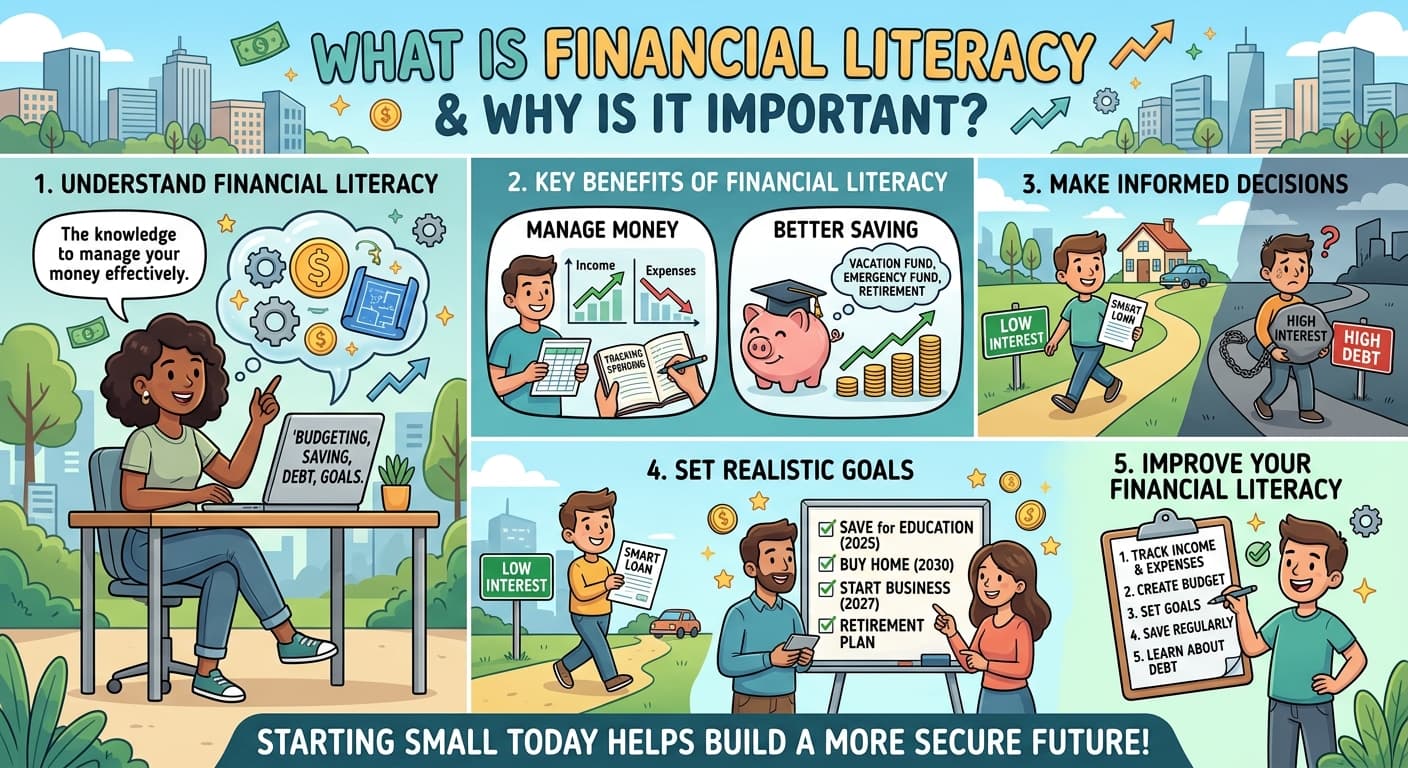
What Is Financial Literacy?
Financial literacy is the ability to understand and manage your money effectively. It includes knowing how to budget, save, manage expenses, understand debt, and plan for future financial needs.
You do not need to be a financial expert to be financially literate. Having a basic understanding of your finances can help you make informed decisions and avoid common money problems.
Why Is Financial Literacy Important?
Financial literacy plays an important role in everyday life. The financial decisions you make today can affect your future, so understanding how to manage money is an important skill.
1. Helps You Manage Your Money
Financial literacy helps you understand where your money comes from and where it goes. By tracking your income and expenses, you can create a budget and make better decisions about your spending.
Practical Example:
If you earn $500 a month and spend around $450, you may feel like you have very little money left. By tracking your expenses, you might discover that small daily purchases, such as coffee, food delivery, or unnecessary subscriptions, are costing you $80–$100 per month. Understanding this can help you identify areas where you can reduce spending.
2. Encourages Better Saving Habits
Saving money regularly can help you prepare for future needs and unexpected expenses. Financial literacy teaches you the importance of setting savings goals and making saving a part of your financial routine.
Practical Example:
If you earn $500 per month, you could decide to save 10% of your income, or $50 each month. After one year, you would have saved $600, not including any interest earned. A small amount saved consistently can become a useful financial reserve over time.
3. Helps You Manage Debt Responsibly
Understanding how loans, interest rates, and repayments work can help you make better borrowing decisions. It can also help you avoid taking on debt that may be difficult to repay.
Practical Example:
Before taking a $1,000 loan, you should not only look at the $1,000 you receive. You should also understand the interest rate, fees, monthly repayment, and total amount you will repay. If the total repayment is $1,200, knowing this cost in advance allows you to decide whether the loan fits your budget.
4. Supports Financial Goal Setting
Financial literacy can help you set realistic financial goals. Whether you want to save for education, a home, a business, or other future needs, having a clear financial plan can help you work toward those goals.
Practical Example:
Suppose your goal is to save $1,200 for education within one year. Instead of simply saying, "I want to save more," you can create a specific plan to save $100 each month. Breaking a large goal into smaller monthly targets makes it easier to track your progress.
5. Helps You Make Informed Decisions
People make financial decisions every day. Understanding basic financial concepts can help you compare different options, understand costs and risks, and choose solutions that are appropriate for your situation.
Practical Example:
Suppose two financial services offer similar loans, but one has a lower interest rate while the other has additional fees. Looking only at the advertised interest rate may not give you the full picture. Financial literacy encourages you to compare the total cost, fees, repayment terms, and other conditions before making a decision.
How Can You Improve Your Financial Literacy?
Improving your financial literacy does not have to be difficult. You can start with a few simple habits:
Track your income and expenses every month.
Create a realistic budget based on your financial situation.
Set short-term and long-term financial goals.
Save regularly, even if you can only save a small amount.
Learn how interest and loan repayments work before borrowing.
Understand the terms and conditions of financial products and services.
Review your financial progress regularly and adjust your plan when necessary.
A Simple Monthly Example
Here is an example of how someone earning $500 per month might organize their income:
Category Amount Essential expenses $300 Savings $50 Transportation $50 Personal spending $50 Emergency/extra $50 Total $500
This is only an example. Everyone's financial situation is different, so a budget should be adjusted according to individual income, expenses, responsibilities, and goals.
The important lesson is to give every dollar a purpose rather than spending without a plan.
Financial Literacy and Your Future
Financial literacy is not simply about saving more money. It is about developing the knowledge and habits needed to make responsible financial decisions.
When you understand your finances, you can better prepare for unexpected situations, manage your daily expenses, and work toward your long-term goals.
Starting with small steps today can help you develop healthier financial habits for the future.
Conclusion
Financial literacy is an important life skill that can help individuals manage their money with greater confidence and responsibility. By understanding budgeting, saving, expenses, debt, and financial planning, you can make more informed decisions about your financial future.
At Delightech, we believe that accessible and responsible financial solutions can help people better manage their financial needs. Through technology and financial services, Delightech continues to support a more convenient and inclusive financial experience.
Learn more about financial topics and financial services through the delightech.com.kh