What Is Alternative Credit Scoring?
Learn what alternative credit scoring is, how it works, the data it uses, and how it may support financial inclusion and better credit assessments.
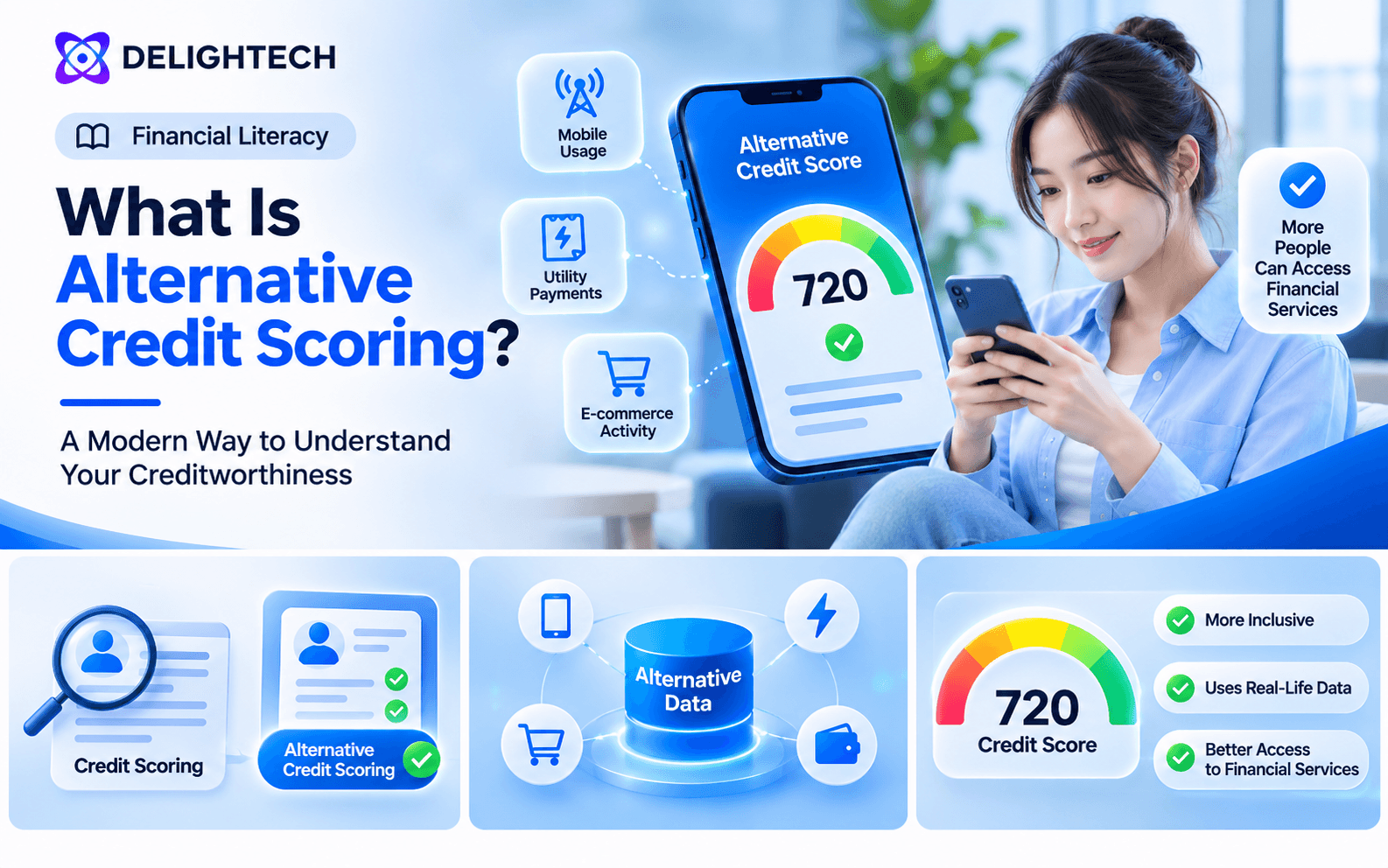
What Is Alternative Credit Scoring? A New Way to Understand Creditworthiness
When someone applies for a loan, financial institutions usually check their credit history to understand their ability to repay.
But what happens when someone has never borrowed money before or has limited credit history? Does that mean they cannot be assessed?
Not necessarily.
This is where Alternative Credit Scoring comes in. It uses additional information beyond traditional credit records to help financial institutions better understand a person's financial behavior.
What Is Alternative Credit Scoring?
Alternative Credit Scoring is a method of assessing creditworthiness using information beyond traditional credit history.
For example, lenders may consider payment records, income information, and other relevant financial activities to understand an applicant's financial situation.
How Does Alternative Credit Scoring Work?
The process generally involves four steps:
Collect Information: Gather relevant data with the applicant's permission.
Analyze Data: Review payment habits and financial activities.
Assess Creditworthiness: Use scoring models to estimate credit risk.
Make a Lending Decision: The lender evaluates the results based on its policies.
What Information Can Be Used?
Depending on the provider, alternative credit scoring may consider:
Payment History: Records of regular bill payments.
Income Information: Patterns of personal income.
Transaction History: Relevant financial activities.
Utility Payments: Electricity, water, and other service payments.
Digital Financial Activities: Information from digital financial services.
Not every financial institution uses the same data sources.
Why Is Alternative Credit Scoring Important?
Traditional credit history may not show a person's complete financial situation.
Alternative credit scoring can offer several potential benefits:
More Financial Opportunities: Helps assess people with limited credit histories.
Better Understanding: Provides additional insights into financial behavior.
Financial Inclusion: May support wider access to financial services.
Better Assessment: Gives lenders more information when reviewing applications.
Traditional vs. Alternative Credit Scoring
Traditional credit scoring mainly uses previous loan records and repayment history.
Alternative credit scoring may also consider payment habits, transaction history, and other relevant financial information.
Both methods help assess creditworthiness, but they use different types of data. Alternative credit scoring does not guarantee loan approval.
What Are the Challenges?
Despite its potential benefits, alternative credit scoring also has challenges:
Data Privacy: Personal information must be protected.
Data Accuracy: Incorrect data can affect assessments.
Fairness: Scoring models should avoid discrimination.
Transparency: Customers should understand how their information is used.
Responsible data management is essential for building trust.
How Does It Support Financial Inclusion?
Imagine someone who has never borrowed money but regularly pays bills and manages daily expenses responsibly.
Traditional credit records may provide limited information about this person.
Alternative credit scoring may allow lenders to consider additional financial information and gain a broader understanding of their financial behavior.
This could create more opportunities for people with limited credit histories to access financial services.
Conclusion
Alternative Credit Scoring offers another way to assess creditworthiness by looking beyond traditional credit records.
It may help financial institutions better understand applicants and support financial inclusion.
However, data privacy, accuracy, transparency, and fairness must remain important priorities.
As FinTech continues to develop, alternative credit scoring may play an important role in the future of financial services.
Stay connected with DELIGHTECH for more insights into FinTech, financial innovation, and the future of digital financial services.