Understanding Good Debt vs. Bad Debt
Debt is a common part of financial life. People may borrow money to buy a home, pay for education, start a business, purchase a vehicle, or manage unexpected expenses. However, not all debt has the same impact on your financial future. Understanding the difference between **good debt and bad debt** can help you make better borrowing decisions and avoid unnecessary financial pressure.
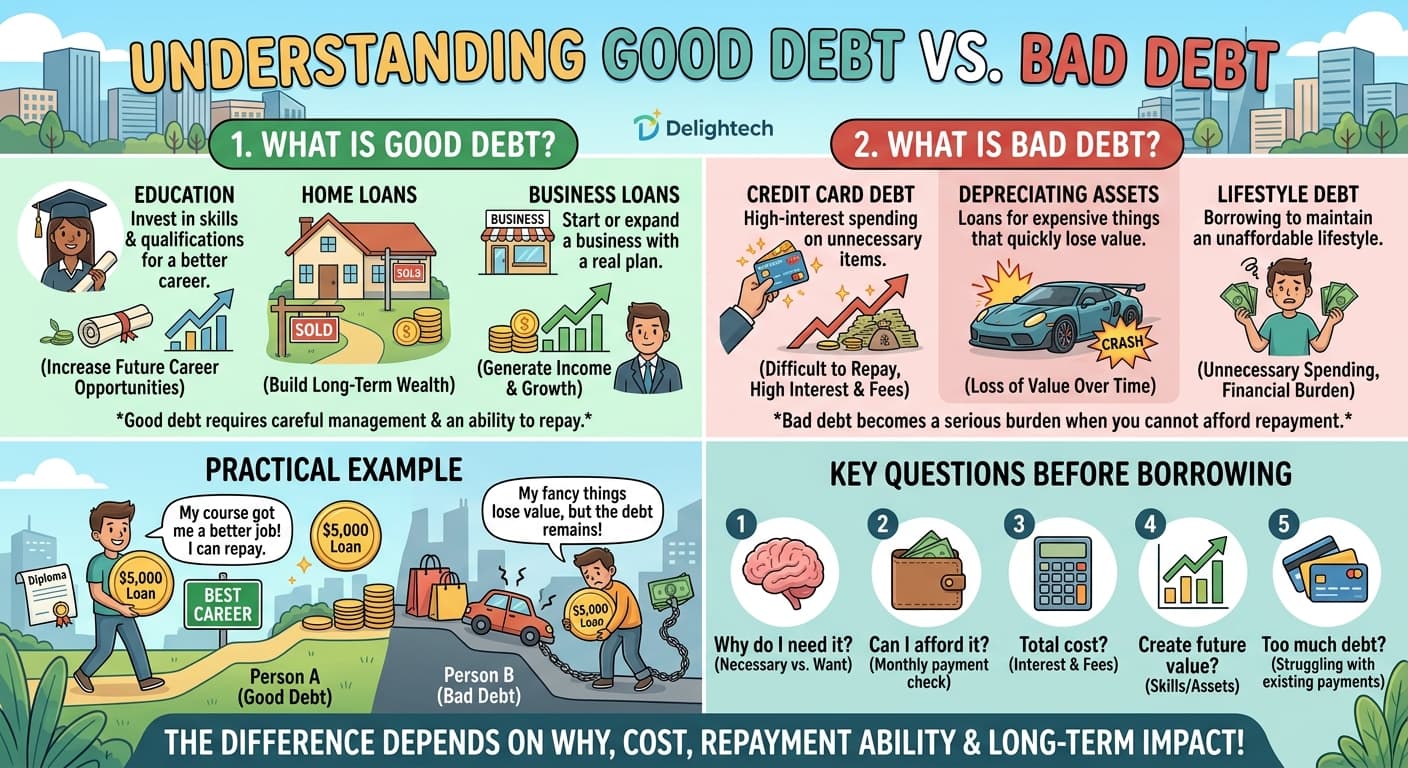
What Is Good Debt?
Good debt is generally debt that can help improve your financial situation or create value over time. It is usually connected to something that may increase your income, skills, assets, or future financial opportunities.
Examples of good debt may include:
Education loans – Borrowing to gain skills or qualifications that can improve future career opportunities.
Home loans – A mortgage can help you purchase an asset that may maintain or increase in value over time.
Business loans – Borrowing to start or expand a business can be useful when the business has a realistic plan to generate income.
Career-related loans – Financing professional training or certifications may help increase earning potential.
However, even good debt needs to be managed carefully. A loan is not automatically "good" simply because it is used for education, a home, or a business. The interest rate, repayment period, monthly payment, and your ability to repay are also important.
What Is Bad Debt?
Bad debt is generally debt used for things that do not create long-term financial value and can become difficult to repay.
Common examples include:
High-interest credit card debt used for unnecessary purchases.
Loans taken for expensive items that quickly lose value.
Borrowing money to maintain a lifestyle you cannot afford.
Taking a new loan to repeatedly pay off existing debt without addressing the underlying problem.
Bad debt can become a serious financial burden when interest and fees continue to increase the amount you owe.
Practical Example: Good Debt vs. Bad Debt
Imagine two people each borrow $5,000.
Person A uses the money to complete a professional course that helps them qualify for a better-paying job. After completing the course, their income increases and they can comfortably manage the monthly loan payments.
Person B uses the same amount to purchase expensive items that they do not really need. The items lose value quickly, but the loan still needs to be repaid with interest.
Although both people borrowed the same amount, the financial results can be very different. Person A used debt with a potential long-term benefit, while Person B took on debt without creating a financial return.
How to Decide If Debt Is Worth Taking
Before borrowing money, ask yourself a few important questions:
1. Why do I need this loan?
Make sure you understand whether the borrowing is necessary or simply something you want.
2. Can I afford the monthly repayment?
Look at your income and regular expenses before taking on another financial commitment.
3. How much will I pay in total?
Do not focus only on the amount you receive. Consider interest, fees, and the total repayment amount.
4. Will this debt create future value?
Consider whether the money could help increase your income, develop your skills, or purchase an asset.
5. Do I already have too much debt?
Taking another loan while struggling with existing repayments can increase financial pressure.
Tips for Managing Debt Responsibly
To maintain healthy finances, consider these simple habits:
Create a monthly budget before taking a loan.
Compare interest rates and repayment terms.
Borrow only what you can reasonably repay.
Pay your installments on time.
Avoid using debt for unnecessary spending.
Build an emergency fund to reduce the need for borrowing during unexpected situations.
Review your existing debts regularly.
The Bottom Line
The difference between good debt vs. bad debt is not simply whether you borrow money. It depends on why you borrow, how much you borrow, the cost of the debt, and whether you can comfortably repay it.
Good financial decisions start with understanding your income, expenses, financial goals, and repayment ability. Before taking on debt, take time to consider the long-term impact rather than focusing only on what you can buy today.
How Delightech Can Help
Managing debt can be easier when you have a clear understanding of your financial situation. Delightech provides financial services designed to support better financial planning and help individuals make more informed financial decisions.
Learn more about Delightech's financial services at delightech.com.kh.