Traditional Banking vs. Digital Banking: Understanding the Key Differences
Discover the differences between traditional banking and digital banking, their benefits, and how technology is transforming modern financial services.
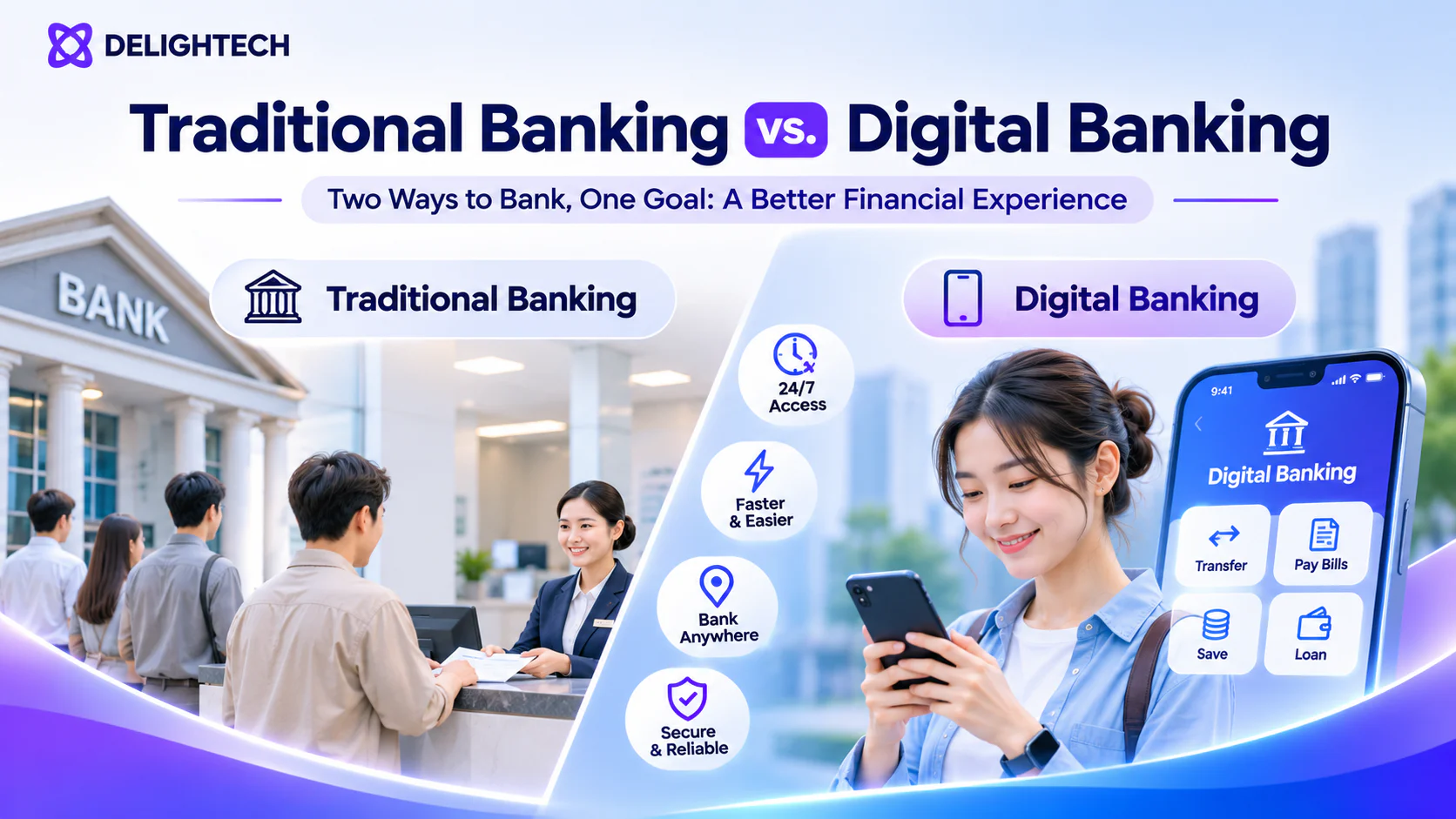
Traditional Banking vs. Digital Banking: Understanding the Key Differences
Banking plays an important role in everyday life. People use banking services to save money, transfer funds, make payments, and manage their finances.
In the past, most banking activities required customers to visit physical branches and complete paperwork. Today, technology has changed how people access financial services through mobile applications and online platforms.
This brings us to two common banking approaches: Traditional Banking and Digital Banking. But what makes them different, and how does each approach serve customers?
What Is Traditional Banking?
Traditional Banking refers to banking services provided mainly through physical branches. Customers visit a bank to open accounts, deposit or withdraw money, transfer funds, and receive assistance from bank employees.
Some common features include:
Physical Branches: Customers visit bank locations to access services.
Face-to-Face Support: Receive direct assistance from bank employees.
Paperwork: Certain banking activities require physical documents and forms.
Branch Operating Hours: Many services follow regular business hours.
Traditional banking provides personal interaction and direct support, especially for customers who prefer handling financial activities in person.
What Is Digital Banking?
Digital Banking allows customers to access banking services through digital channels, such as mobile applications and websites.
Instead of visiting a physical branch for every activity, customers can complete many banking tasks using smartphones or computers.
Common features include:
Mobile Banking: Check balances and manage accounts through applications.
Digital Payments: Pay bills and make transactions online.
Money Transfers: Send and receive money through digital channels.
24/7 Access: Use many services at any time, depending on availability.
Online Account Services: Complete certain activities without visiting a branch.
Digital banking makes financial activities more convenient by allowing customers to access available services remotely.
What Are the Main Differences?
Both banking approaches provide financial services, but they differ in how customers access and use them.
Traditional BankingDigital BankingRequires visiting physical branchesAccessible through mobile apps and websitesGenerally follows branch operating hoursMany services available 24/7May require physical paperworkSupports online processesProvides face-to-face supportOffers digital and phone supportOften involves in-person transactionsSupports digital transactions
These differences show how technology has created more flexible ways for customers to manage their finances.
What Are the Benefits of Digital Banking?
Digital banking offers several advantages for individuals and businesses:
Convenience: Manage financial activities using smartphones or computers.
Time Saving: Complete many transactions without visiting a bank branch.
Accessibility: Access available services from different locations.
Better Financial Management: Monitor account activities and transaction records.
Digital Innovation: Supports new ways of delivering financial services.
These benefits help make everyday banking activities easier and more flexible.
Does Traditional Banking Still Matter?
Yes. Even as digital banking continues to grow, traditional banking remains important.
Some customers prefer face-to-face assistance, especially when handling complex financial activities or seeking personal guidance.
Physical branches also support customers who may not be familiar with digital technology. This means traditional and digital banking can work together to meet different customer needs.
How Is Technology Changing the Banking Industry?
Technology continues to transform the banking industry through mobile applications, digital payment systems, artificial intelligence, and online identity verification.
These innovations help financial institutions improve their services, simplify certain processes, and create more convenient customer experiences.
As customer expectations change, banks must continue adapting their services to meet the needs of an increasingly digital world.
Conclusion
Traditional Banking focuses on physical branches and personal assistance, while Digital Banking provides convenient access through mobile applications and online platforms.
Both approaches have their own advantages and continue to play important roles in financial services.
As FinTech continues to develop, technology will remain an important part of creating more accessible, flexible, and connected banking experiences.
Stay connected with DELIGHTECH for more insights into FinTech, digital innovation, and the future of financial services.