The Importance of Budgeting for Financial Stability
Budgeting for financial stability is an important part of managing personal finances. A well-planned budget helps individuals understand their income, control expenses, prepare for unexpected costs, and work toward financial goals. By developing a realistic budgeting habit, people can make more informed financial decisions and improve their overall financial well-being.

What Is Budgeting for Financial Stability?
Budgeting for financial stability means creating a clear plan for how you will manage your income and expenses. It allows you to understand how much money is available, what expenses need to be paid, and how much can be allocated toward savings or other financial goals.
Budgeting is not about stopping all spending. Instead, it is about making sure your money is being used according to your priorities and financial situation.
Why Is Budgeting Important?
Without a budget, it can be difficult to identify where your money is going each month. Regular expenses, small purchases, and unexpected costs can gradually affect your financial position.
A budget can help you:
Control unnecessary spending
Manage regular expenses
Build savings
Prepare for emergencies
Manage financial commitments
Plan for future goals
For example, if someone earns $600 per month but does not track their expenses, they may spend most of their income before the end of the month. By creating a budget, they can allocate money for essential expenses and savings before spending on non-essential items.
How to Create a Simple Budget
The first step is to identify your total monthly income. Next, list your essential expenses, such as housing, food, transportation, utilities, and other regular payments.
Practical example:
Suppose your monthly income is $600:
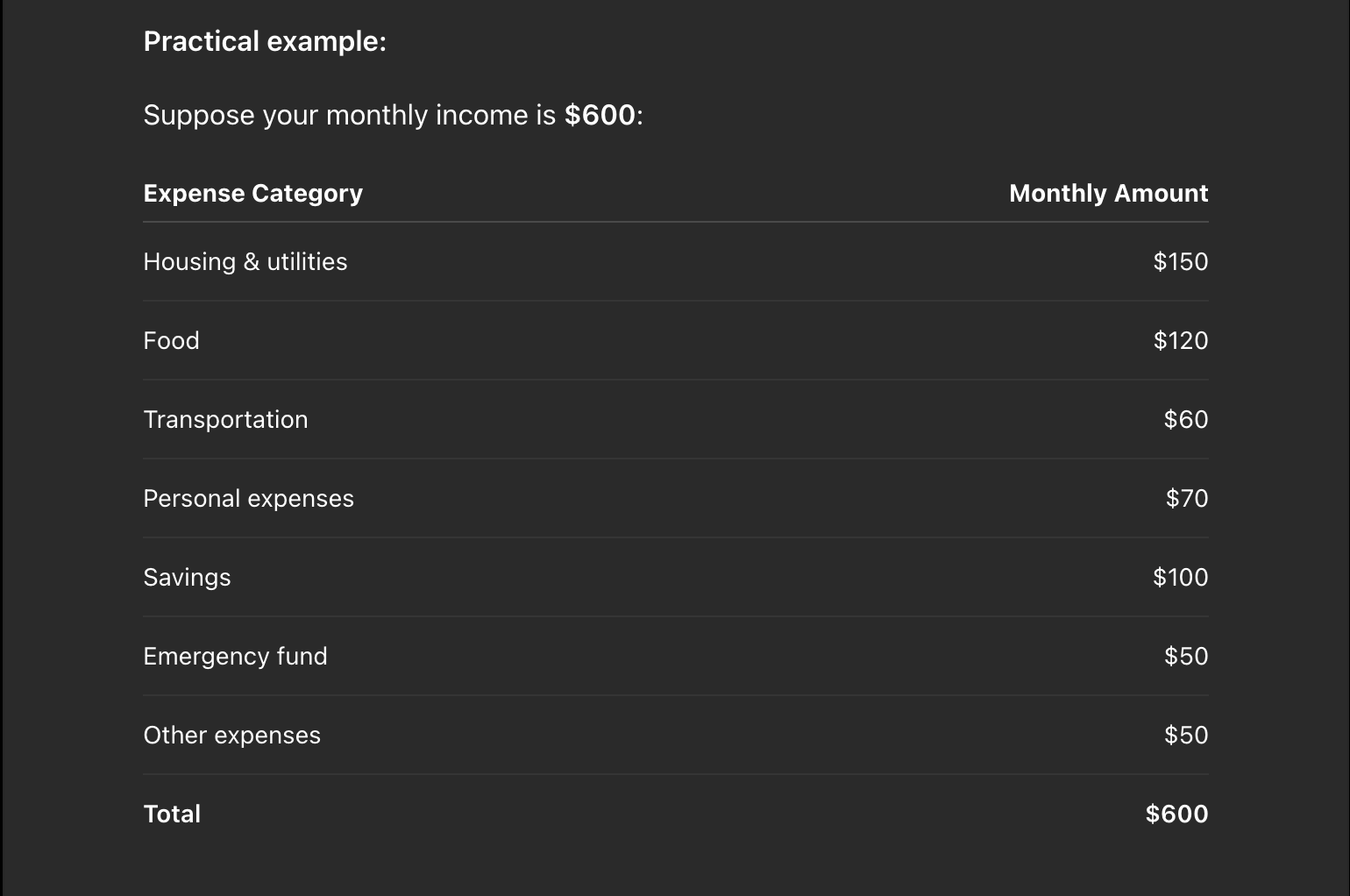
This example shows how income can be allocated before the month begins. The actual amounts should always be adjusted based on an individual's income, responsibilities, and financial priorities.
Track Your Expenses
Creating a budget is only effective when you also track your actual spending. Reviewing expenses throughout the month can help you identify areas where you may be spending more than planned.
For example, if you planned to spend $70 on personal expenses but have already spent $60 halfway through the month, you can reduce non-essential spending during the remaining days.
This simple habit can make budgeting for financial stability easier to maintain.
Budgeting and Emergency Savings
Budgeting can also help individuals prepare for unexpected financial situations. Setting aside a small amount each month can gradually create an emergency fund.
For example, saving $50 per month would result in:
$50 × 12 months = $600 per year
This amount could help cover unexpected expenses, such as urgent repairs or other necessary costs.
Review Your Budget Regularly
A budget should change when your financial situation changes. Income, household expenses, financial commitments, and personal goals may change over time.
Reviewing your budget each month allows you to adjust your spending and savings according to your current situation.
Conclusion
Budgeting for financial stability is a practical financial habit that can help individuals manage their money more effectively. By understanding income, controlling expenses, tracking spending, building savings, and preparing for unexpected costs, people can make more informed financial decisions.
There is no single budget that works for everyone. A good financial plan should reflect an individual's income, expenses, responsibilities, and financial goals.
If you need support with managing your finances or understanding available financial solutions, Delightech provides financial services designed to support individuals and businesses with their financial needs. Seeking appropriate financial guidance can help you better understand your options and make informed decisions based on your financial situation.