The Difference Between Saving and Investing
Saving and investing are both important parts of financial planning, but they serve different purposes. Learn the key difference between saving and investing, when to use each approach, and practical examples to help you make better financial decisions for your short-term and long-term financial goals.
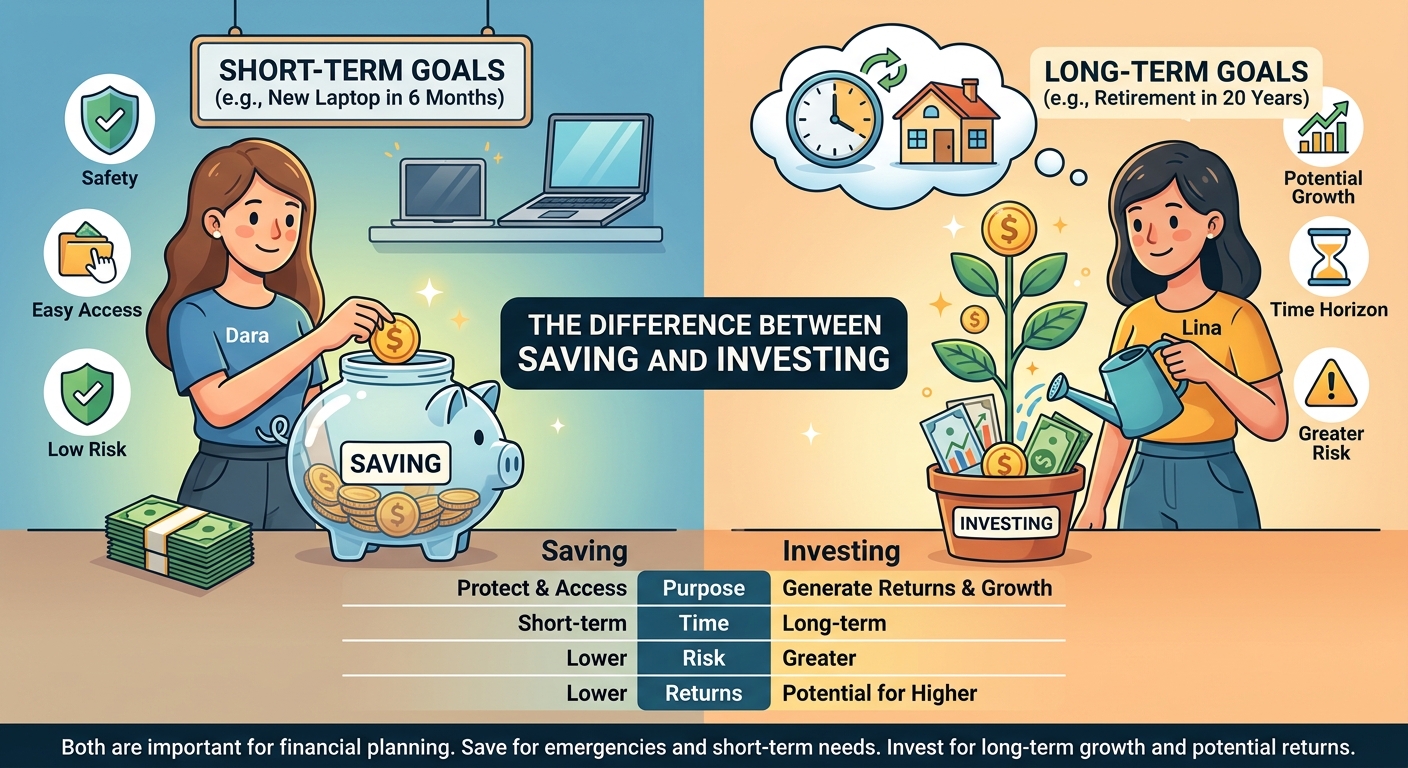
Understanding the difference between saving and investing is important for anyone who wants to manage money effectively. While both involve setting money aside for the future, they differ in purpose, risk, accessibility, and potential returns.
What Is Saving?
Saving means keeping money for future use in a safe and accessible place, such as a savings account. The main purpose of saving is to protect your money while keeping it available when you need it.
For example, if you earn $500 per month and save $50 each month, you will have $600 after one year, excluding interest. This money could be used for emergencies, a new phone, education expenses, or a planned purchase.
Saving is generally suitable for short-term financial goals because the money is easier to access and usually involves lower risk. However, savings typically provide lower returns compared with long-term investments.
What Is Investing?
Investing means putting money into financial assets with the goal of generating returns or increasing its value over time. Examples include stocks, bonds, mutual funds, and other investment products.
For example, imagine you have $1,000 that you will not need for the next 10 years. Instead of keeping all of it in a regular savings account, you could consider investing it in a suitable diversified investment product. If the investment performs well, its value may grow over time. However, investments can also lose value, so investing involves greater risk than saving.
Saving vs. Investing: A Practical Example
Imagine two people, Dara and Lina.
Dara wants to buy a laptop in six months. Since she will need the money soon, saving may be more appropriate because she wants to keep the money accessible and avoid significant fluctuations in value.
Lina is planning for retirement in 20 years. Because she has a much longer time horizon, she may consider investing some of her money to potentially achieve greater long-term growth.
This example shows that the choice between saving and investing depends on your financial goals, time horizon, risk tolerance, and personal financial situation.
Which One Should You Choose?
Saving and investing do not necessarily have to compete with each other. They can work together as part of a financial plan.
A common approach is to build an emergency fund through saving first. Once you have enough money available for unexpected expenses, you may consider investing money that you do not need in the short term.
In simple terms:
Save for emergencies and short-term goals.
Invest for long-term goals and potential growth.
Consider your risk tolerance before investing.
Review your financial goals regularly.
Conclusion
The difference between saving and investing comes down mainly to purpose, time, risk, and potential returns. Saving can help you protect and access money for short-term needs, while investing can provide an opportunity for long-term financial growth but comes with greater risk.
Understanding both options can help you make more informed financial decisions and create a financial plan that matches your goals.
At Delightech, we provide financial service solutions to support individuals and businesses with their financial needs. Developing good financial habits and understanding your options can help you make more informed decisions and prepare for unexpected financial challenges.