How to Set Realistic Financial Goals
Setting realistic financial goals can help you manage your money with greater purpose and build a stronger financial future. Learn how to create achievable financial goals, organize your priorities, and develop a practical plan that fits your income and financial situation.
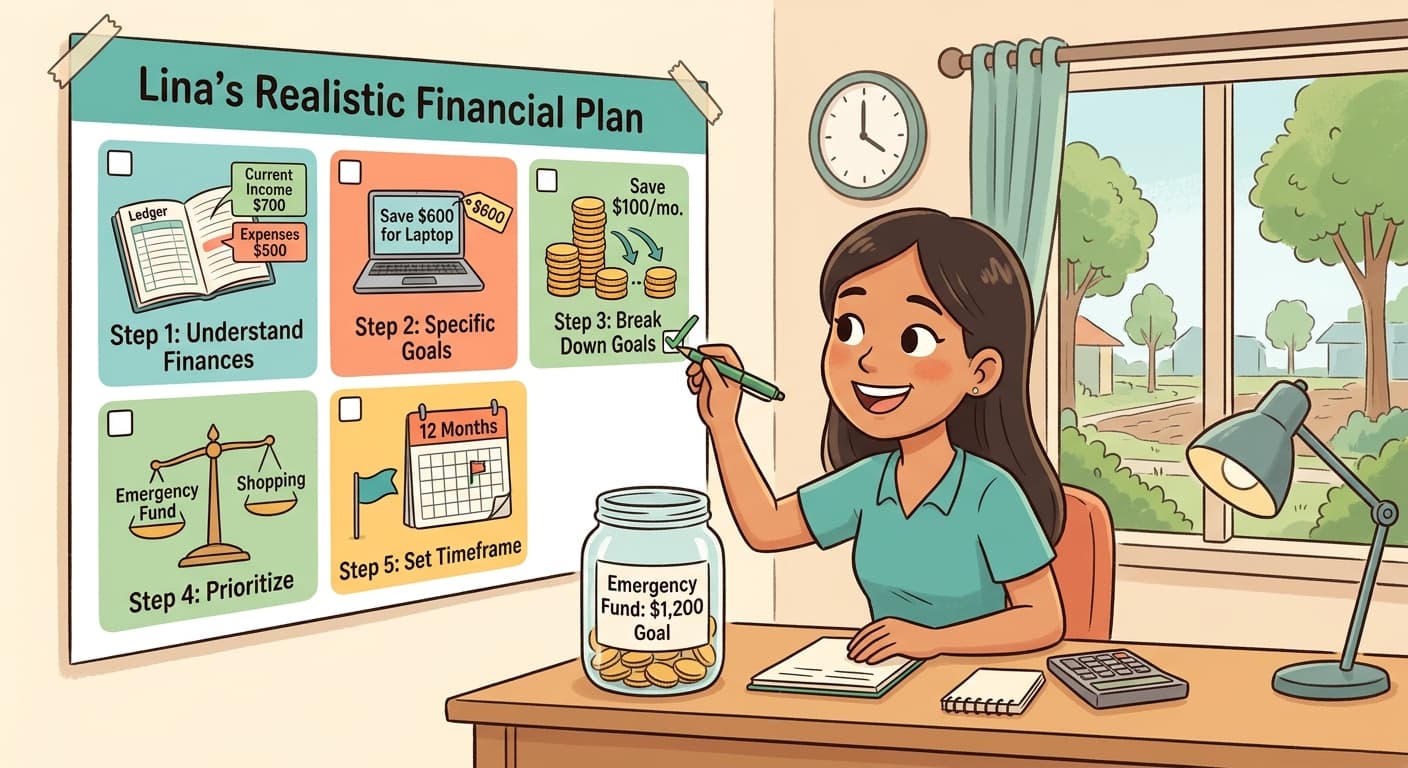
Having financial goals can make it easier to understand where your money should go and what you want to achieve in the future. However, setting goals that are too ambitious or unrealistic can make it difficult to stay motivated. Learning how to set realistic financial goals can help you create a financial plan that is practical, measurable, and achievable.
1. Understand Your Current Financial Situation
Before setting a financial goal, start by looking at your current income, expenses, savings, and debt. Understanding your financial position helps you set goals that match what you can realistically afford.
For example, if your monthly income is $600 and your essential expenses are $400, you may not be able to save $500 every month. A savings goal of $50 or $100 may be more realistic.
2. Make Your Goals Specific
A good financial goal should be clear rather than general. Instead of saying, “I want to save more money,” decide exactly how much you want to save and what you are saving for.
For example:
“I want to save $600 for a laptop within six months.”
This goal is easier to understand and track because it has a specific amount and deadline.
3. Break Large Goals Into Smaller Steps
Large financial goals can seem difficult when you look at the total amount. Breaking them into smaller monthly or weekly targets can make them easier to achieve.
For example, if you want to save $1,200 within one year, you could aim to save approximately $100 each month. Focusing on the monthly target can make the larger goal feel more manageable.
4. Prioritize Your Financial Goals
You may have several financial goals at the same time, such as building an emergency fund, paying off debt, buying a car, or saving for education. Trying to achieve everything at once may put unnecessary pressure on your finances.
Start by identifying which goals are most important and urgent. For example, building an emergency fund may be a higher priority than saving for a luxury purchase.
5. Set a Timeframe
A realistic financial goal should have a timeframe. A deadline gives you a target to work toward and allows you to measure your progress.
For example, instead of saying, “I want to save $2,000,” you could set a goal to save $2,000 within 20 months. This would require saving approximately $100 per month.
6. Review and Adjust Your Goals
Financial situations can change. Your income, expenses, or priorities may be different several months from now. Reviewing your goals regularly allows you to make adjustments when necessary.
Changing a goal does not mean you have failed. If your circumstances change, adjusting the amount or deadline can help keep the goal realistic.
Practical Example
Imagine that Lina earns $700 per month. After paying for essential expenses, she has approximately $200 available for savings and other personal expenses.
Lina wants to build an emergency fund of $1,200. Instead of trying to save the entire amount quickly, she decides to save $100 per month.
Her plan would look like this:
Monthly savings: $100
Financial goal: $1,200
Estimated timeframe: 12 months
By setting a clear target and a manageable monthly amount, Lina has a realistic plan that fits her financial situation.
Conclusion
Setting realistic financial goals is not about achieving everything as quickly as possible. It is about understanding your financial situation, setting clear priorities, breaking larger goals into smaller steps, and regularly reviewing your progress. A realistic plan can help you stay consistent and make better financial decisions over time.
If you want professional support in understanding your financial options and planning toward your financial goals, Delightech can help. To learn more about Delightech and its financial services, visit https://delightech.asia/en.