How to Manage Personal Debt Responsibly
Learning how to manage personal debt responsibly can help you maintain financial stability, reduce financial stress, and work toward your long-term goals. Discover practical strategies for managing debt, making repayments on time, and avoiding unnecessary financial difficulties.
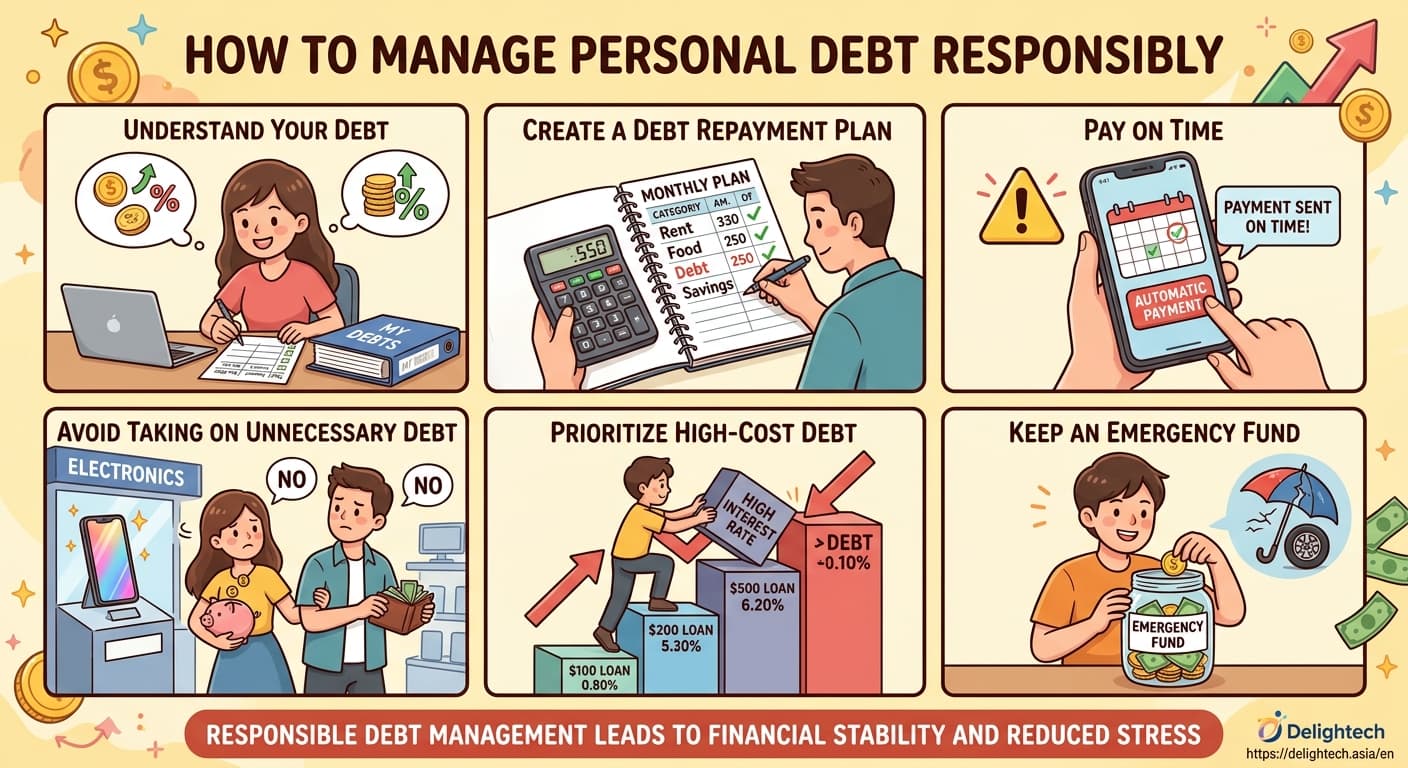
Debt can be a useful financial tool when it is managed carefully. People may use loans or credit to pay for education, a home, a vehicle, or unexpected expenses. However, taking on more debt than you can comfortably repay can create financial pressure. Learning how to manage personal debt responsibly is therefore an important part of good financial planning.
1. Understand Your Debt
The first step is to understand exactly how much you owe. Make a list of your debts, including the outstanding balance, interest rate, monthly payment, and repayment period.
For example, if you have a $1,000 personal loan and a $500 credit card balance, knowing the total amount you owe can help you create a realistic repayment plan.
2. Create a Debt Repayment Plan
After understanding your debt, create a monthly plan for making repayments. Your repayment amount should fit within your monthly budget without affecting essential expenses.
For example, if your monthly income is $600 and your essential expenses are $400, you could allocate part of the remaining $200 toward debt repayment while keeping some money available for savings or unexpected costs.
3. Pay on Time
Making payments on time is one of the most important habits when managing debt. Late payments may result in additional fees or other financial consequences, depending on the type of debt and agreement.
Setting reminders or arranging automatic payments can help you avoid missing important due dates.
4. Avoid Taking on Unnecessary Debt
Before borrowing money, consider whether the expense is necessary and whether you can comfortably afford the repayment.
For example, if you want to purchase a new phone using credit, consider whether the monthly repayment fits your budget. Waiting and saving for the purchase may be a better option if taking on additional debt would make your finances difficult to manage.
5. Prioritize High-Cost Debt
When you have several debts, it can be useful to pay particular attention to debts with higher interest rates. Paying these debts down more quickly may help reduce the amount of interest you pay over time.
For example, if one debt has a significantly higher interest rate than another, you could focus additional repayment toward the higher-cost debt while continuing to make the required payments on your other debts.
6. Keep an Emergency Fund
Managing debt does not mean using every available dollar to repay loans. Keeping some savings for unexpected expenses can help prevent you from needing to take on additional debt when an emergency occurs.
Even a small emergency fund can provide some financial flexibility when unexpected costs arise.
Practical Example
Imagine that Dara earns $700 per month and has $300 in essential monthly expenses. She also has a $1,000 personal loan that requires regular repayments.
Instead of spending all of her remaining income, Dara creates a monthly budget that includes:
Income: $700
Essential expenses: $300
Debt repayment: $150
Savings: $100
Other expenses: $150
By following a structured plan and making her repayments on time, Dara can gradually reduce her debt while continuing to build savings.
The exact amount someone should allocate to debt repayment will depend on their income, expenses, interest rates, and financial circumstances.
Conclusion
Learning to manage personal debt responsibly is about understanding what you owe, planning repayments carefully, making payments on time, and avoiding unnecessary borrowing. Responsible debt management can help you maintain better control over your finances and work toward your long-term financial goals.
If you need professional support to better understand your financial situation, explore suitable financial options, or plan your financial goals, Delightech can help. Learn more about Delightech and its financial services at https://delightech.asia/en.