How Does a Core Banking System Work? | DELIGHTECH
Learn what a Core Banking System is, how it works, its key functions, and how it supports modern banking and digital financial services.
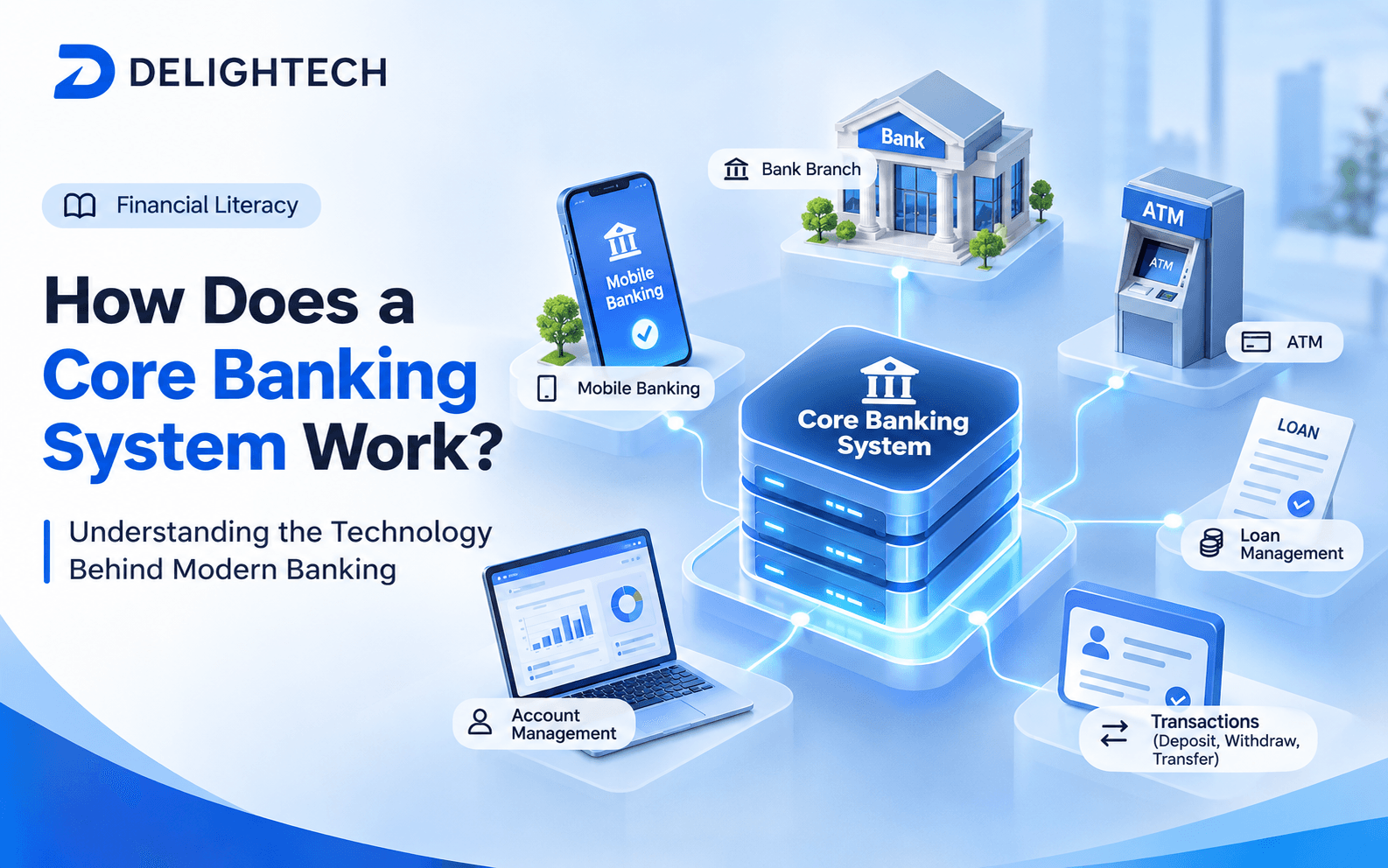
How Does a Core Banking System Work? Understanding Modern Banking Technology
When you transfer money, check your account balance, or make a payment through a mobile banking application, a system works behind the scenes to process these activities. One important technology supporting these operations is a Core Banking System.
As financial services become more digital, understanding how this technology works helps us see how modern banking operates.
What Is a Core Banking System?
A Core Banking System is a central software platform that helps financial institutions manage customer accounts, process transactions, and maintain financial records.
It connects different banking operations into one system, allowing information to be managed across supported branches and digital channels.
How Does a Core Banking System Work?
A Core Banking System processes financial activities through several steps:
Transaction Request: A customer initiates a transaction, such as transferring money or making a payment.
Verification: The system checks account information and transaction details.
Processing: The system processes the request according to the institution's rules.
Account Updates: Relevant account balances and transaction records are updated.
Confirmation: The customer receives a transaction confirmation.
This process helps financial institutions manage daily banking activities efficiently.
Key Functions of a Core Banking System
Some important functions include:
Account Management: Managing customer accounts and balances.
Transaction Processing: Handling deposits, withdrawals, and transfers.
Loan Management: Supporting loan records and repayment schedules.
Customer Information: Maintaining customer account information.
Reporting: Supporting financial reporting and monitoring.
Why Is Core Banking Important?
Core Banking Systems help financial institutions improve their daily operations and customer services.
Some key benefits include:
Efficiency: Reduces repetitive manual processes.
Accessibility: Supports banking services through different digital channels.
Accuracy: Helps maintain consistent financial records.
Security: Supports authentication, access controls, and transaction monitoring.
Innovation: Provides infrastructure for developing digital financial services.
Practical Example: How Does It Work?
Imagine Dara has $500 in his bank account and wants to transfer $100 to his friend.
When Dara makes the transfer through his mobile banking application, the system checks his account information and available balance. If the transaction meets the bank's requirements, it processes the transfer and updates the relevant account records.
Dara then receives a confirmation showing that his transaction has been completed.
This simple example demonstrates how Core Banking Systems support everyday financial activities.
How Does Core Banking Support Digital Financial Services?
Core Banking Systems provide important infrastructure for modern financial services. They can work alongside mobile applications, payment platforms, and APIs to support digital banking experiences.
As technology continues to develop, these systems help financial institutions expand their services, improve operational efficiency, and respond to changing customer needs.
Conclusion
Core Banking Systems play an important role in modern banking by connecting account management, transaction processing, and financial operations through centralized technology.
Understanding how they work helps us appreciate the technology behind everyday financial activities and the continued development of digital financial services.
Stay connected with DELIGHTECH for more insights into FinTech, digital innovation, and the future of financial services.