How Digital Financial Services Are Changing Cambodia
A customer pays for coffee by scanning a QR code. A business owner receives payments without handling cash. A family transfers money without travelling to a bank. These everyday experiences reflect a bigger transformation in Cambodia's financial industry. Digital financial services are changing how people make payments, manage money, and interact with financial institutions. But beyond convenience, this transformation raises important questions about accessibility, security, customer trust, and the future of financial services. Explore how digital technology is reshaping Cambodia's financial landscape, the opportunities it creates for businesses and individuals, and why reliable financial infrastructure matters in building a more connected
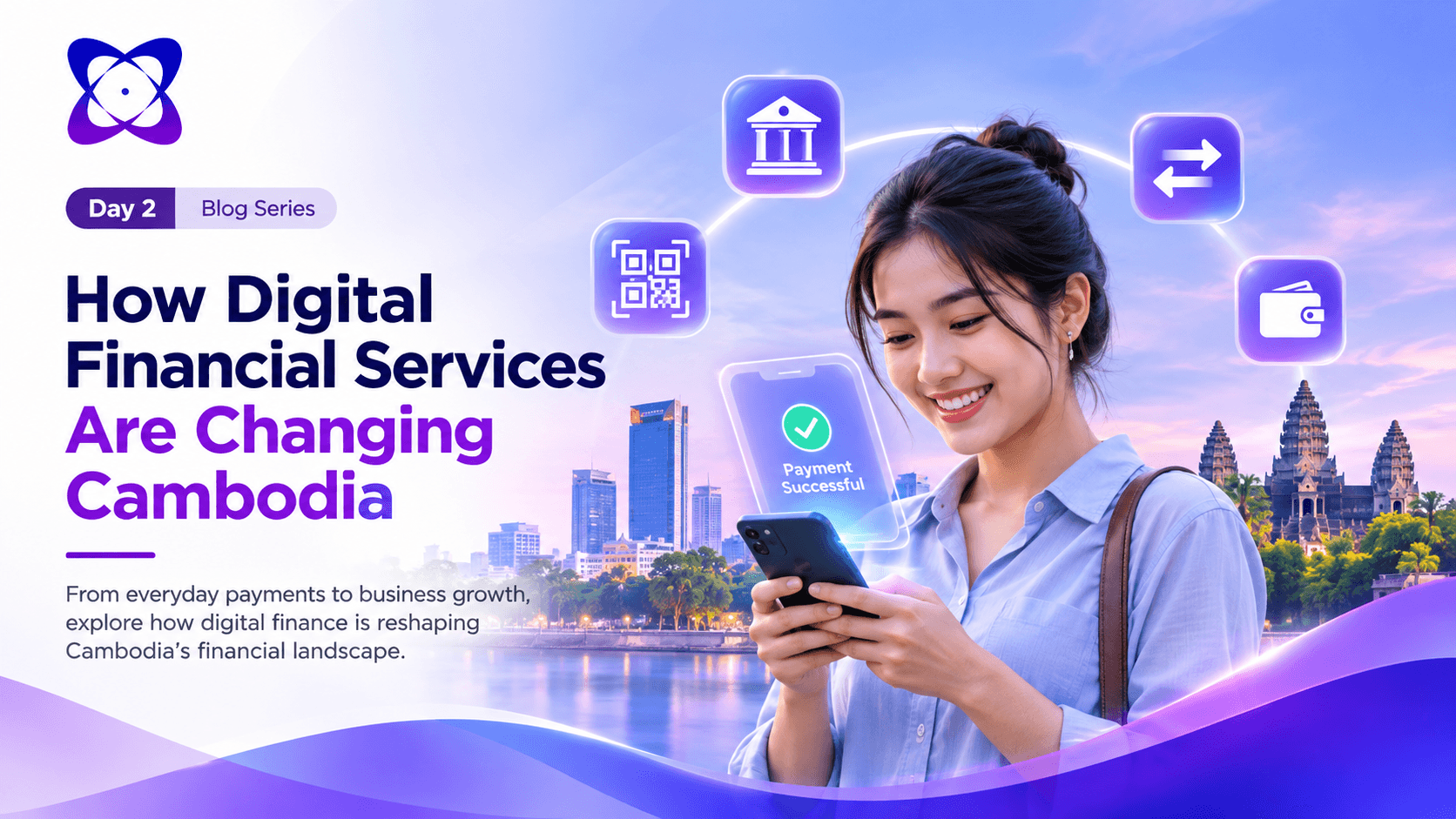
How Digital Financial Services Are Changing Cambodia
Introduction: A QR Code, a Smartphone, and a Changing Financial Landscape
A customer walks into a coffee shop in Phnom Penh, orders a drink, and reaches for their smartphone. Instead of taking out cash, they scan a QR code, confirm the payment, and continue with their day.
For the shop owner, the payment is recorded digitally. For the customer, the process takes only a few seconds.
It may seem like an ordinary transaction, but it represents something much bigger: the changing relationship between people, businesses, and financial services.
Across Cambodia, digital technology is creating new ways to transfer money, make payments, manage accounts, and access financial services. What once required physical visits and manual processes can increasingly be done through digital platforms.
But this transformation is not simply about replacing cash with smartphones. It is about building a financial ecosystem that is more connected, efficient, and accessible.
So, what is changing, and what does it mean for Cambodia's future?
1. From Traditional Transactions to Digital Experiences

Not long ago, many everyday financial activities depended heavily on physical processes. Sending money could require visiting a service location. Paying bills meant handling cash or completing manual transactions. Businesses often needed to manage payments and records separately.
Technology has introduced another way of doing things.
Today, mobile banking, electronic transfers, and QR payments allow people to complete many transactions without visiting a physical branch.
Consider a small shop owner who receives payments from dozens of customers every day. With digital payments, the business can accept electronic transactions and access digital records instead of relying entirely on cash and handwritten notes.
For customers, the experience becomes more convenient. For businesses, it creates opportunities to improve how they manage daily operations.
This is one of the biggest changes brought by digital financial services: financial activities are becoming more integrated into everyday life.
2. Cambodia's Digital Payment Transformation

Cambodia provides an interesting example of how digital payment infrastructure can reshape financial activities.
The National Bank of Cambodia has introduced and developed several payment systems to support a more efficient and interconnected financial environment.
One important development is Bakong, a payment system designed to connect participating financial institutions and support digital transactions.
Another important development is KHQR, a standardized QR payment system that helps customers make payments across participating banks and payment service providers.
These developments are making it easier for people and businesses to interact through digital payment networks.
The growth is also reflected in transaction activity. According to the National Bank of Cambodia's Financial Stability Review 2025, Bakong processed approximately 1.3 billion transactions in 2025, an increase of 118.7% compared with 2024.
This growth shows how digital payment infrastructure is becoming an increasingly important part of Cambodia's financial ecosystem.
However, the significance of this development goes beyond transaction numbers. It demonstrates how financial infrastructure can connect different institutions and create more convenient experiences for customers.
3. What Does This Transformation Mean for Businesses?

For businesses, digital financial services are changing more than the way payments are collected. They are influencing how companies operate, serve customers, and manage financial information.
Imagine a small business that previously relied mainly on cash payments. The owner had to count money, record sales manually, and organize transaction information at the end of each day.
With suitable digital payment solutions, some of these activities can become more organized.
Digital transactions can provide useful records, make payment collection more convenient, and reduce dependence on manual processes.
For growing businesses, these improvements can support better operational management.
Larger organizations and financial institutions also benefit from digital transformation. Modern financial systems can help them process information, connect services, and manage increasingly complex operations.
The important point is that digital technology should not simply introduce new tools. It should help businesses solve practical problems.
4. Convenience Is Important, but Trust Matters More

As financial services become more digital, customers increasingly depend on technology to manage important parts of their financial lives.
That creates an important responsibility for financial service providers.
A convenient application is valuable, but customers also need to know that their information is protected, their transactions are reliable, and the services they use are transparent.
Consider a customer receiving a suspicious message asking them to share a password or verification code. Without sufficient awareness, they may become a victim of financial fraud.
This is why digital financial development must go hand in hand with cybersecurity, consumer protection, and financial education.
Financial institutions and technology providers need to prioritize secure systems, responsible data management, and clear communication.
Customers also have a role to play. Using strong passwords, protecting verification codes, checking payment details, and avoiding suspicious links are simple habits that can help reduce digital risks.
Ultimately, trust is what allows people to feel confident using financial services.
5. The Next Challenge: Making Digital Finance Work for More People

Digital financial services have created new opportunities, but not everyone benefits equally.
Some people may have limited access to smartphones or reliable internet connections. Others may not feel confident using digital applications or understanding financial products.
Small businesses may also face challenges when adopting new technology.
This reminds us that digital transformation should not be measured only by the number of applications launched or transactions completed.
The bigger question is whether these services are genuinely useful and accessible to the people who need them.
For Cambodia, the next stage of development will require continued investment in digital infrastructure, financial literacy, customer protection, and services designed around different customer needs.
Innovation becomes more meaningful when it reaches beyond technology users who are already comfortable with digital services.
6. Why Financial Infrastructure Matters

Behind every successful digital payment is a system working in the background.
When a customer makes a payment, several processes may need to take place: transaction information must be received, verified, processed, and communicated between relevant systems.
Customers may only see a confirmation on their screens, but reliable financial infrastructure makes that experience possible.
This is where technologies such as Core Banking Systems, payment integration, APIs, and secure data management become important.
For financial institutions, modern technology infrastructure supports more efficient operations and helps connect different financial services.
At Delightech, we recognize that the future of financial services depends not only on customer-facing applications but also on the systems that support them.
As a Financial Technology company focused on Core Banking Systems and technology-driven financial solutions, we believe reliable infrastructure and continuous innovation are important foundations for a stronger financial ecosystem.
The objective is not simply to make financial services digital. It is to help create systems that are reliable, efficient, and capable of supporting changing customer and business needs.
Conclusion: The Real Transformation Is Bigger Than Digital Payments
Cambodia's financial landscape is changing, and digital financial services are becoming an increasingly important part of that journey.
A QR payment at a local coffee shop, a mobile transfer between family members, or an electronic transaction between businesses may seem like small activities.
Together, however, they represent a broader transformation in how the economy operates.
The next chapter of digital finance will depend on more than technological advancement. It will require trust, security, collaboration, and financial infrastructure that can support long-term development.
Because the future of financial services is not defined by how many transactions happen digitally, but by how effectively technology improves the way people and businesses manage their financial lives.
About Delightech
Delightech is a Financial Technology company focused on developing technology-driven financial solutions and Core Banking Systems to support the evolving financial industry.
Learn more about Delightech: https://delightech.com.kh/