Common Money Mistakes and How to Avoid Them
Managing money effectively is an important part of achieving financial stability and reaching your future goals. However, common mistakes such as overspending, not having a budget, relying too much on debt, or failing to save for emergencies can make it harder to manage your finances. The good news is that these mistakes can often be avoided by developing simple and consistent financial habits. In this article, we explore some of the most common money mistakes people make and practical ways to avoid them. From creating a realistic budget and tracking expenses to building an emergency fund and making informed financial decisions, understanding these habits can help you take greater control of your money and build a stronger financial future.
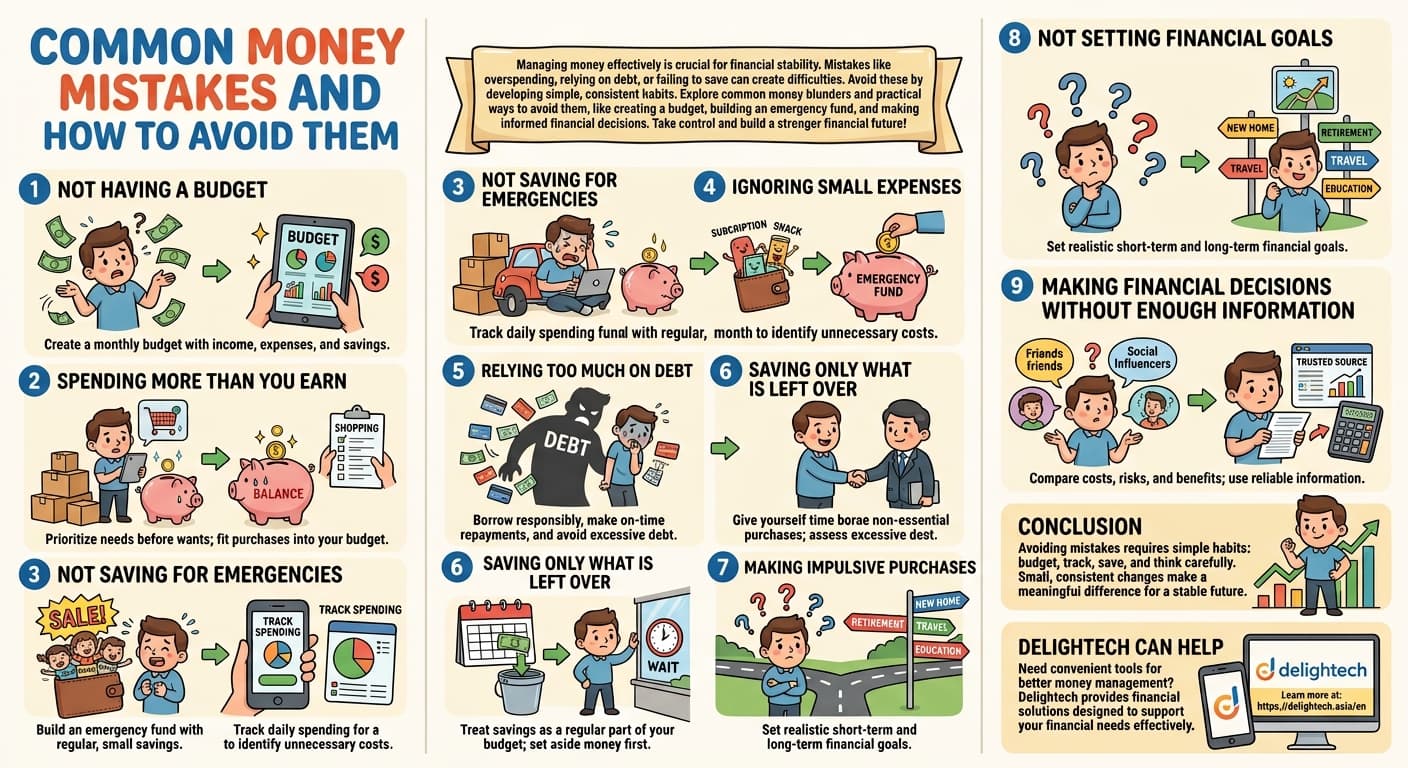
Common Money Mistakes and How to Avoid Them
Managing money is an important part of everyday life. Whether you are a student, employee, business owner, or simply planning for your future, making good financial decisions can help you achieve greater financial stability.
However, many people make common money mistakes without realizing how much they can affect their financial situation over time. Understanding these mistakes is the first step toward avoiding them.
1. Not Having a Budget
One of the most common money mistakes is not having a clear monthly budget. Without a budget, it can be difficult to know where your money is going or whether you are spending more than you earn.
How to avoid it:
Create a simple monthly budget that includes your income, essential expenses, savings, debt payments, and personal spending. Review your budget regularly and make adjustments when necessary.
2. Spending More Than You Earn
Spending more money than you earn can quickly lead to financial stress and debt. Small unnecessary purchases may not seem significant individually, but they can become a large expense when repeated regularly.
How to avoid it:
Prioritize your needs before your wants. Before making a purchase, consider whether it is necessary and whether it fits within your monthly budget.
3. Not Saving for Emergencies
Unexpected expenses can happen at any time. Medical expenses, repairs, family emergencies, or changes in income can create financial pressure if you do not have savings available.
How to avoid it:
Build an emergency fund by saving a small amount regularly. Even if you cannot save a large amount each month, starting with a manageable amount can help you gradually build financial security.
4. Ignoring Small Expenses
Small daily expenses are easy to overlook. Buying snacks, drinks, subscriptions, or other unnecessary items may seem harmless, but frequent spending can have a noticeable impact on your monthly finances.
How to avoid it:
Track your daily spending for a month. This can help you identify unnecessary expenses and understand where you can reduce spending.
5. Relying Too Much on Debt
Loans and credit can be useful when managed responsibly, but depending on debt for everyday expenses can make financial management more difficult.
How to avoid it:
Only borrow when necessary and make sure you understand the interest rate, fees, and repayment terms. Always make repayments on time and avoid taking on more debt than you can reasonably manage.
6. Saving Only What Is Left Over
Some people wait until the end of the month to save whatever money remains. In many cases, there may be little or no money left after paying expenses.
How to avoid it:
Treat savings as part of your regular budget. Set aside a specific amount when you receive your income instead of waiting until the end of the month.
7. Making Impulsive Purchases
Buying something simply because it looks attractive or is temporarily discounted can lead to unnecessary spending. Impulse purchases can make it harder to achieve important financial goals.
How to avoid it:
Give yourself time before making non-essential purchases. Ask yourself whether you really need the item, whether you can afford it, and whether the purchase supports your financial priorities.
8. Not Setting Financial Goals
Without clear financial goals, it can be difficult to know what you are saving for or how to measure your financial progress.
How to avoid it:
Set realistic short-term and long-term financial goals. These could include building an emergency fund, paying off debt, saving for education, purchasing a home, or preparing for future expenses.
9. Making Financial Decisions Without Enough Information
Making financial decisions based only on advice from friends, social media, or unreliable sources can sometimes lead to poor choices.
How to avoid it:
Take time to understand your options before making important financial decisions. Compare costs, risks, benefits, and terms, and use reliable sources of financial information when making decisions.
Conclusion
Avoiding common money mistakes does not require complicated financial strategies. It starts with simple habits such as creating a budget, tracking expenses, saving regularly, managing debt responsibly, and thinking carefully before making financial decisions.
By identifying and improving these habits, you can gain better control over your finances and work toward a more stable financial future. Small changes made consistently can make a meaningful difference over time.
Delightech can help
Having the right financial tools and services can make managing your finances more convenient and organized. Delightech provides financial solutions designed to support better financial management and help users manage their financial needs more effectively.
Learn more about Delightech and its services at https://delightech.asia/en.